
Je n’ai pas vu passer septembre et octobre est en train de prendre le même chemin! Je suis très en retard sur mes teintures, mais c’est devenu habituel à cette époque de l’année. Voici un article avec plus de photos que de texte pour vous montrer quelques unes des productions des dernières semaines. Il y en a que j’ai posté sur les réseaux, mais pas toujours dans leur format original.
I haven’t seen September go by and October is going the same way! I’m very late with my dyeing, but that’s become the norm at this time of year. Here’s an article with more photos than text to show you some of the work I’ve done over the last few weeks. Some of them I’ve posted on social networks, but not always in their original format.
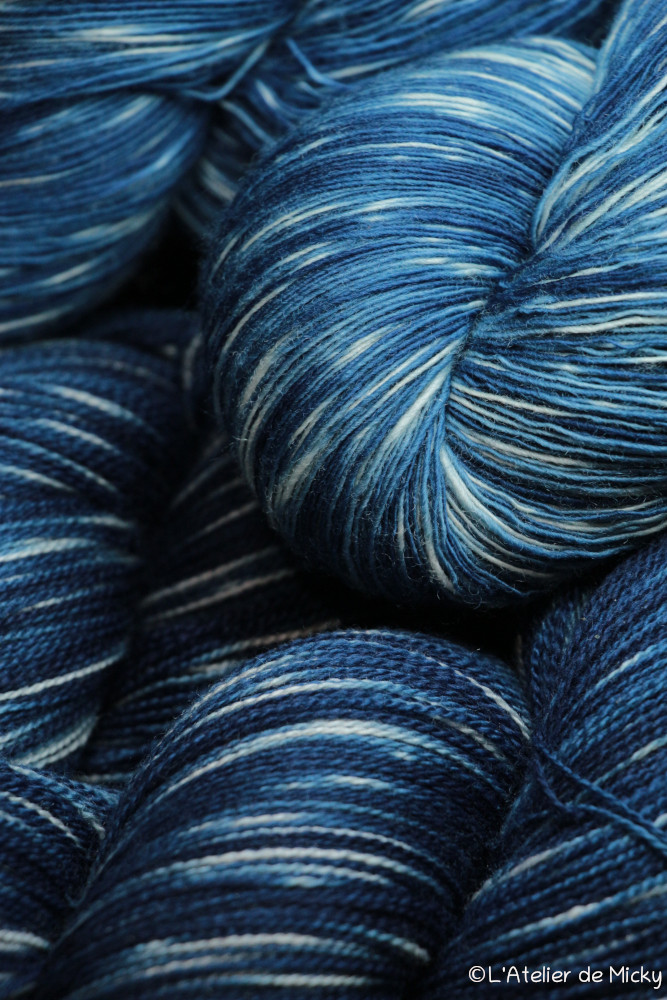
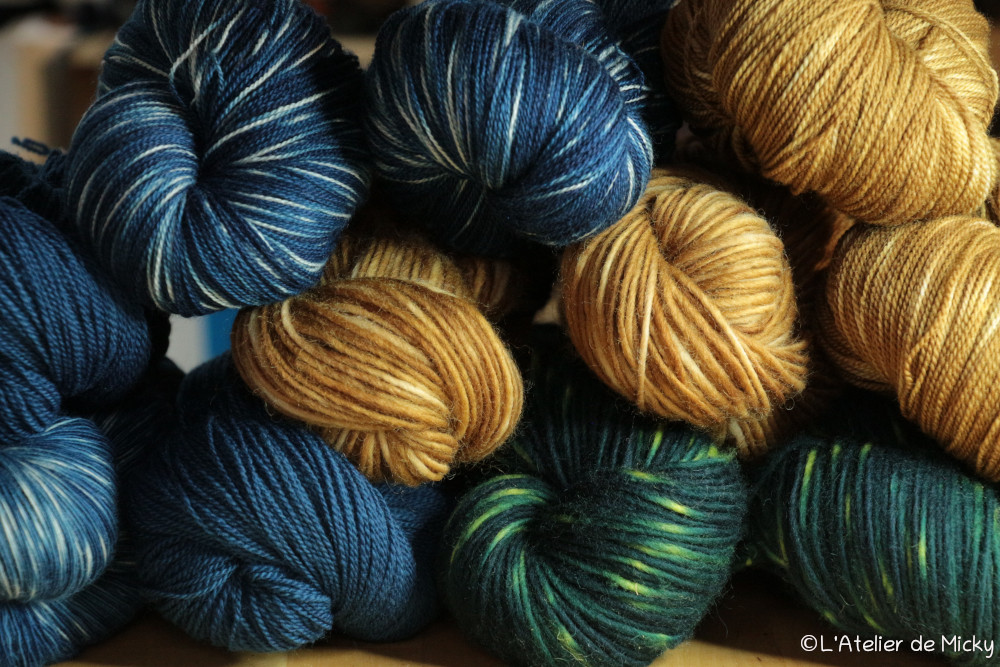
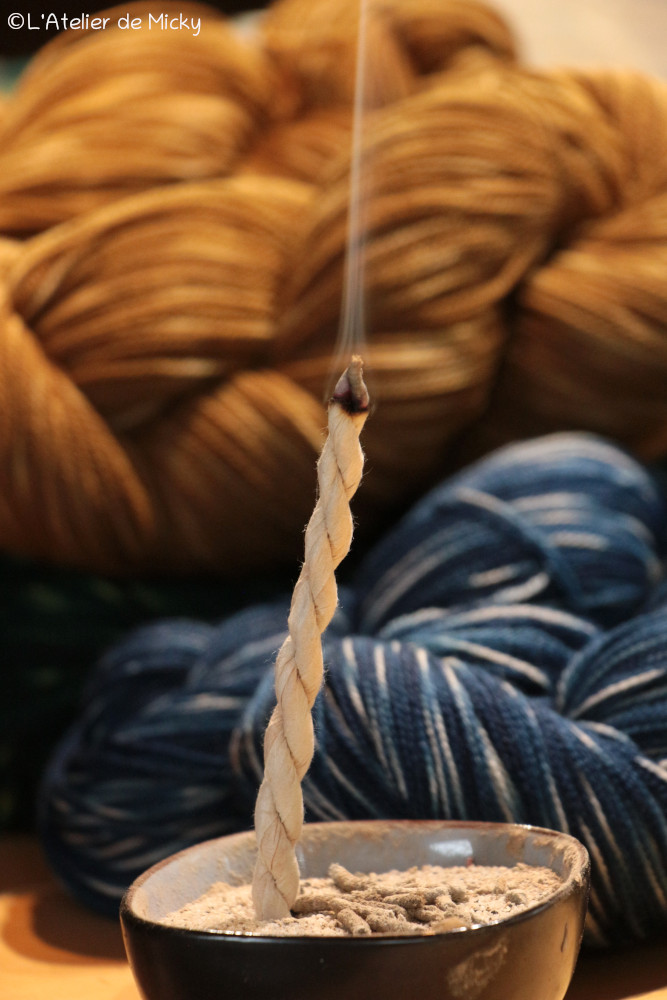
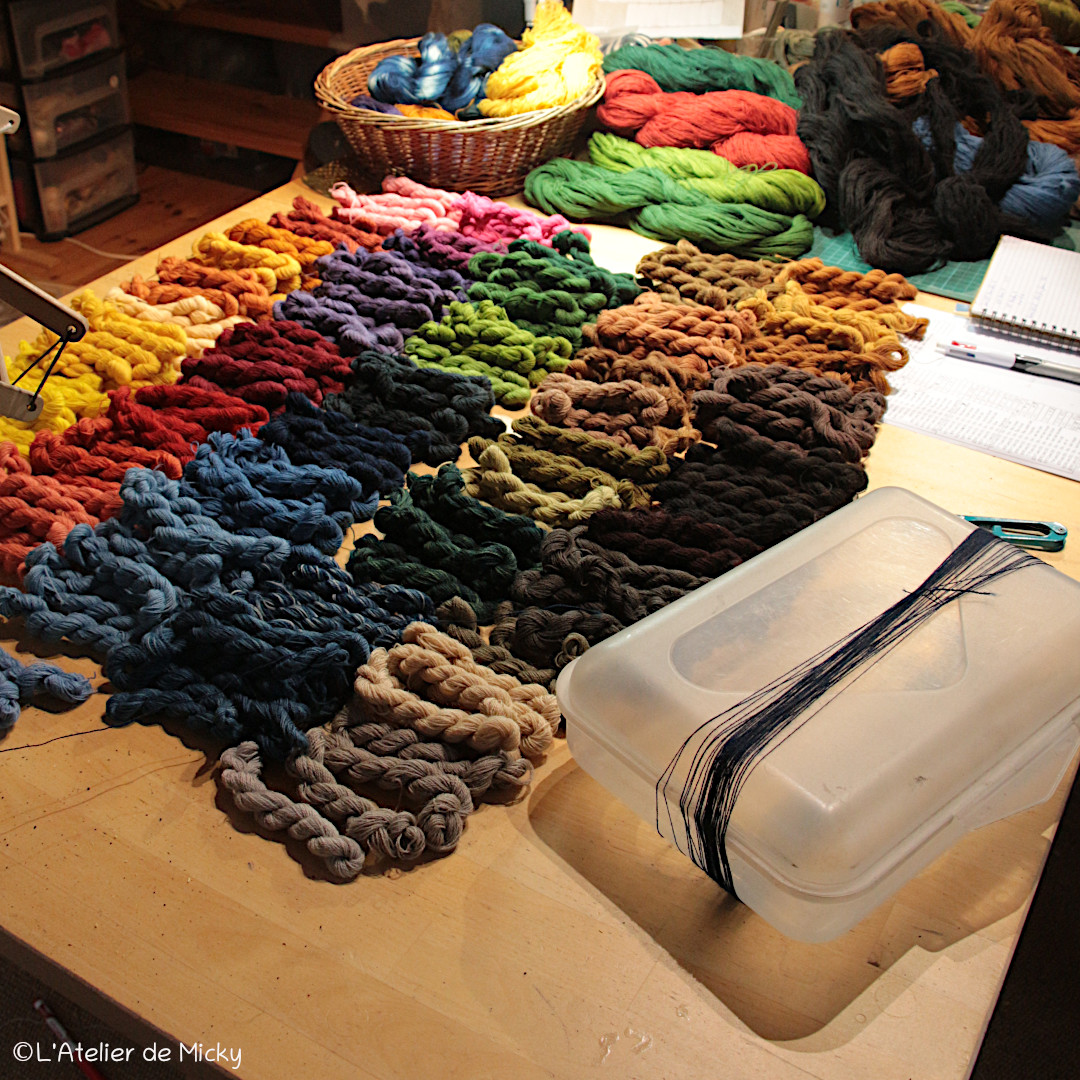
En septembre, j’ai continué à faire quelques réserves d’écheveaux tie and dye en bleu et aux brous de noix verts.
In September, I have dyed a few more tie-dye skeins with indigo and green walnut husks.

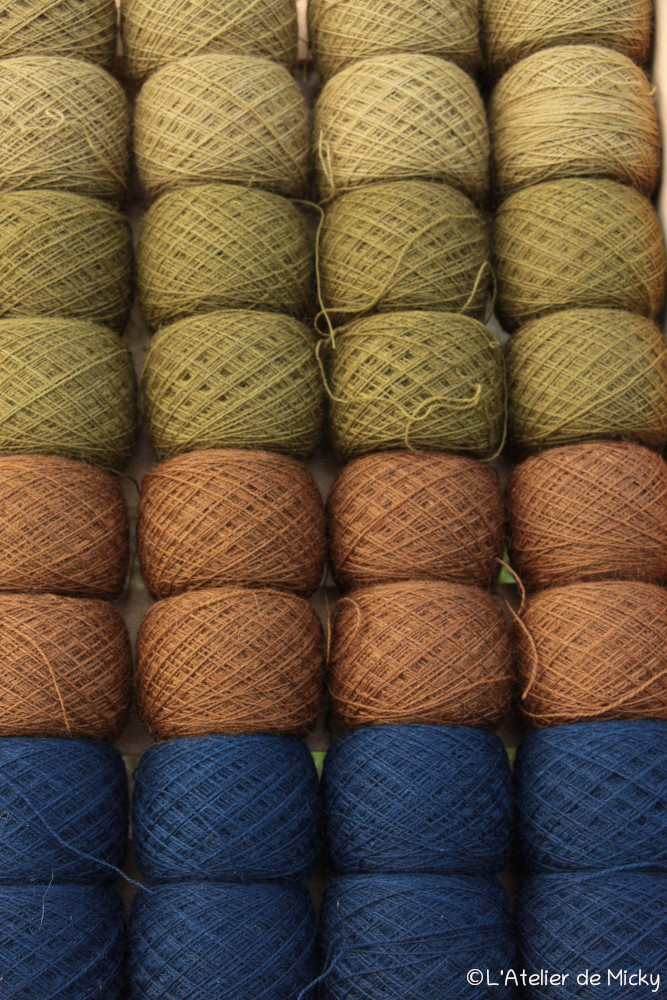
Il a fallu également refaire pas mal de réserves de pelotes de laine 20/2 fine.
I also had to make some stock for the fine 20/2 wool.
Une cliente costumière rencontrée sur le marché de Compiègne me fait régulièrement confiance pour teindre des galons de coton et des coupons de lin ancien avec du cachou (Acacia catechu): elle en fait des musettes militaires 19ème, avec de la mercerie d’époque.
A costume designer I met at the Compiègne market entrusts me some cotton braids and old linen coupons on a regular basis to be dyed with cutch (Acacia catechu): she uses them to make 19th century military musettes, using period haberdashery.
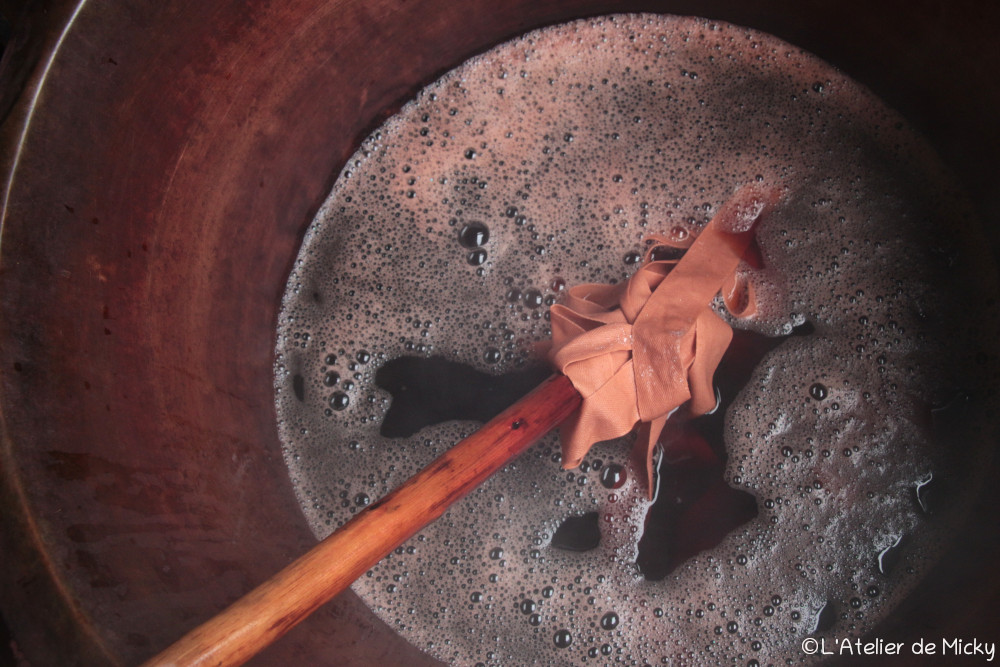
Sur les fibres végétales, afin d’aller vers ce rosé qu’on voit sur des pièces d’époque, je ne mordance pas. Le cachou a la réputation d’avoir une bonne tenue dans le temps et aux lavages grâce à sa richesse en tanins. On s’en servait autrefois pour « tanner » des voiles de bateaux avec un mélange de cachou et de suif, notamment les sinagots bretons, traditionnellement « cachoutées » pour les rendre moins sensibles au pourrissement.
J’aime beaucoup les teintes que le cachou peut donner sur de la laine, ici j’ai utilisé le bain qui avait servi à teindre les tissus des futures musettes.
On plant fibres, in order to achieve the pinkish hue seen on period pieces, I don’t mordant. Cutch has a reputation for being lightfast and washfast thanks to its high tannin content. In the past, it was used to ‘tan’ boat sails with a mixture of cutch and tallow to make them less susceptible to rotting.
I love the shades that cutch can give to wool, and here I used the bath that had been used to dye the fabrics of the future musettes.

Avec les teintures aux brous de noix, cela fait une belle palette automnale!
Along with the walnut-dyed skeins, it makes a nice autumnal palette!
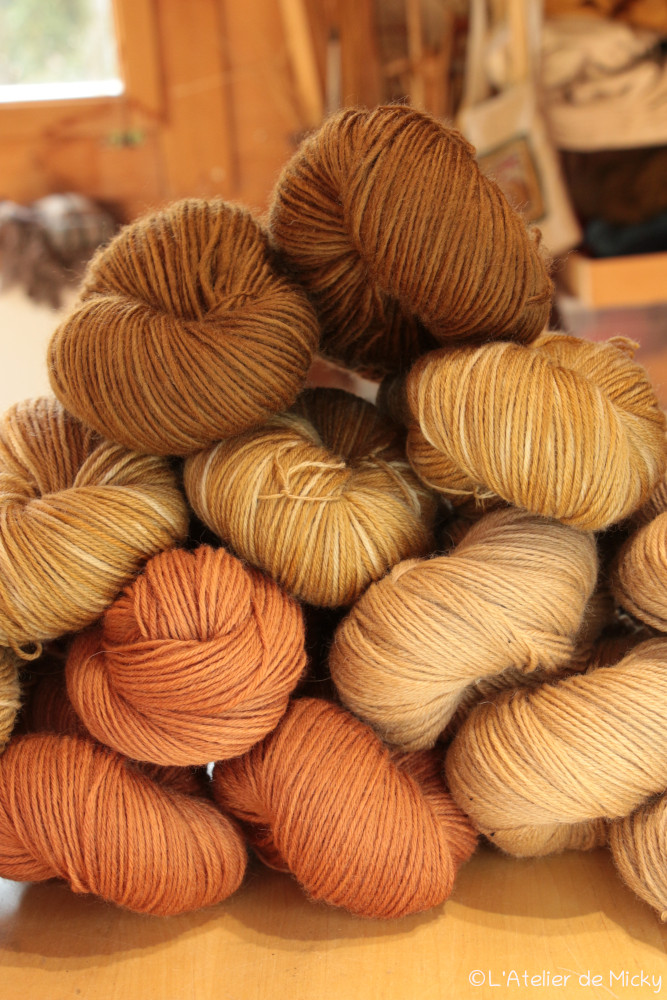
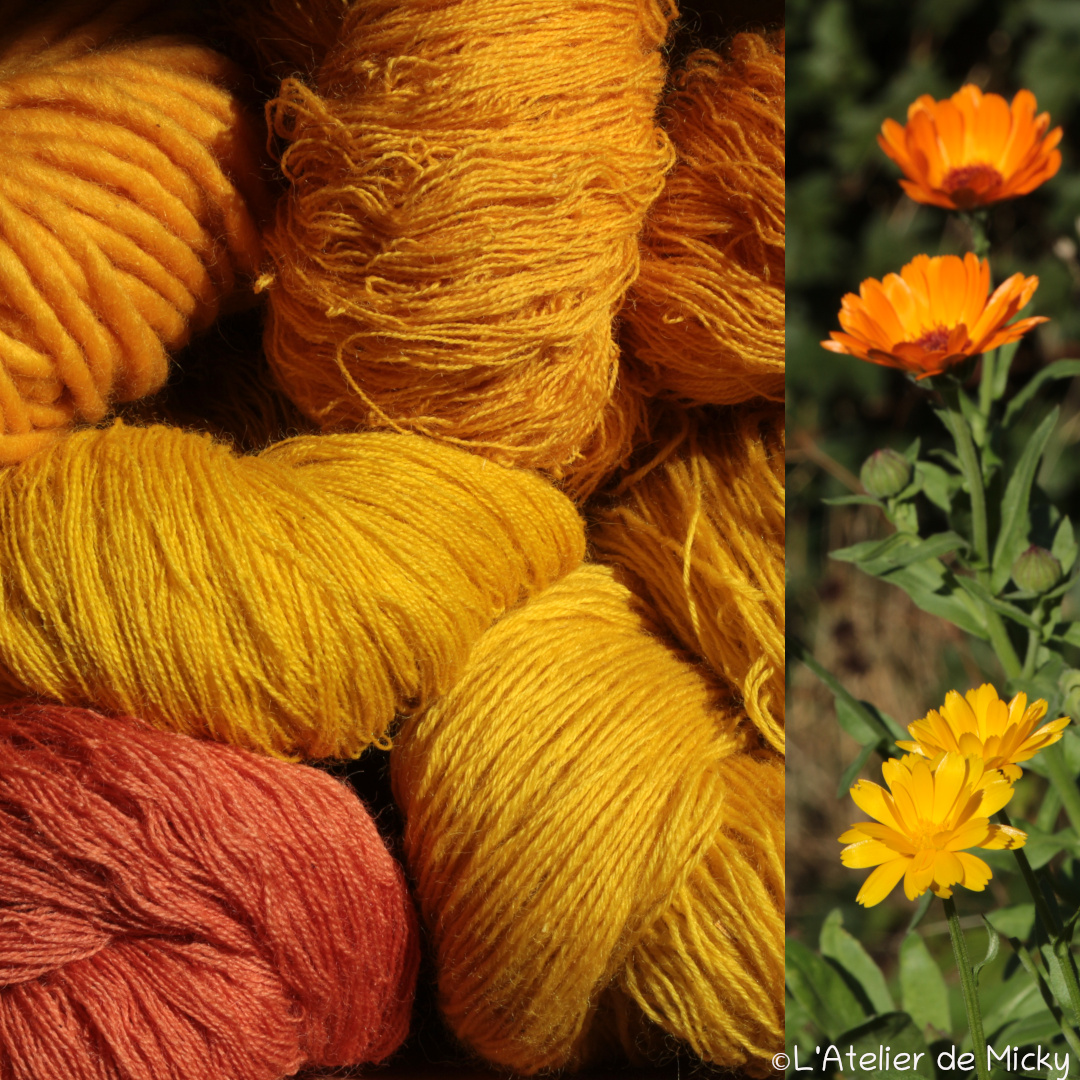
Il me fallait également des verts vifs, teintés en même temps que des jaunes qui pètent, avec de la gaude.
I also needed bright greens, dyed in the same pot as bright yellow, using weld.

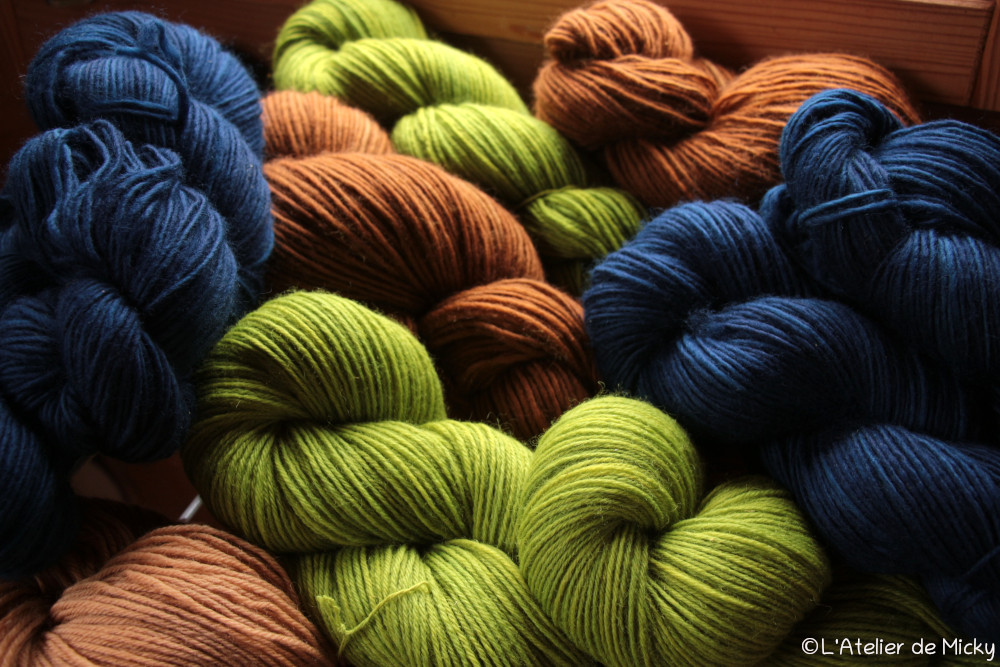
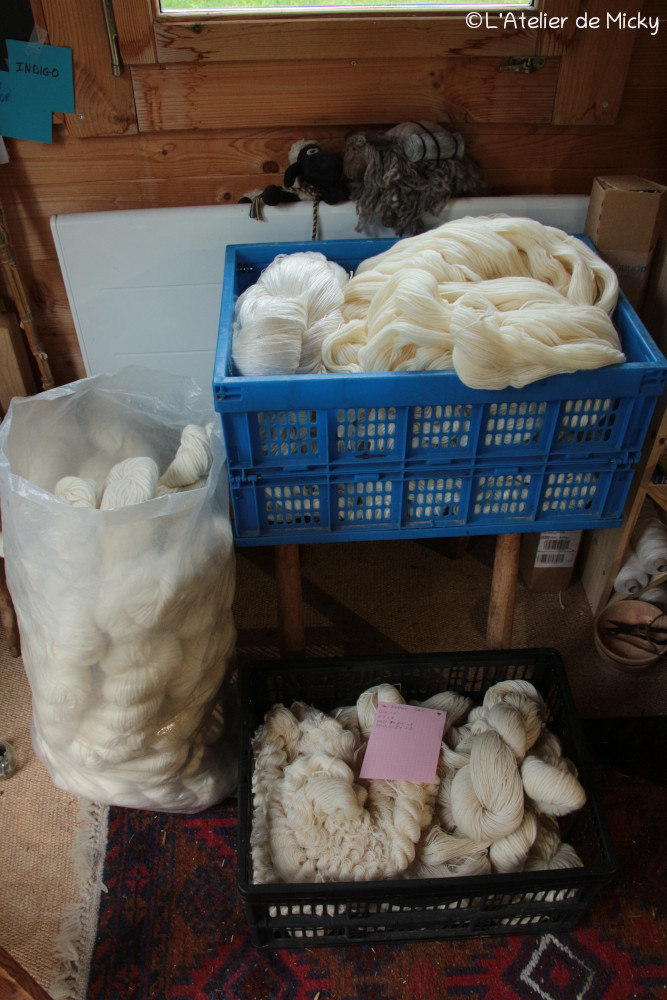
Entre temps, il a fallu mordancer pas mal de kilos de laine en prévision de la suite des teintures.
Meanwhile, I had to mordant a few kilos of wool for the dyes to follow.
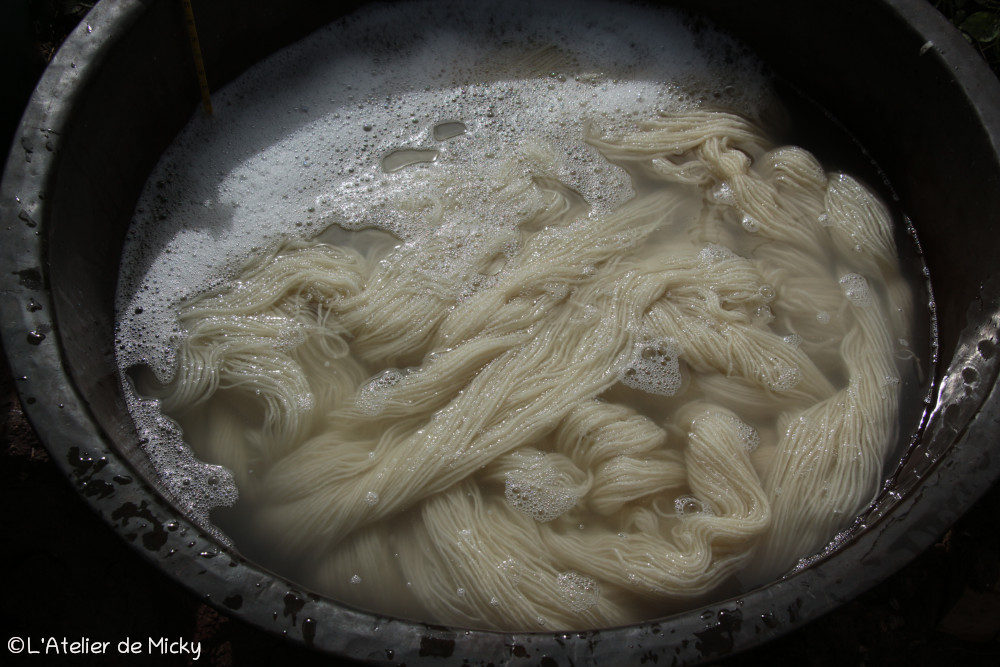
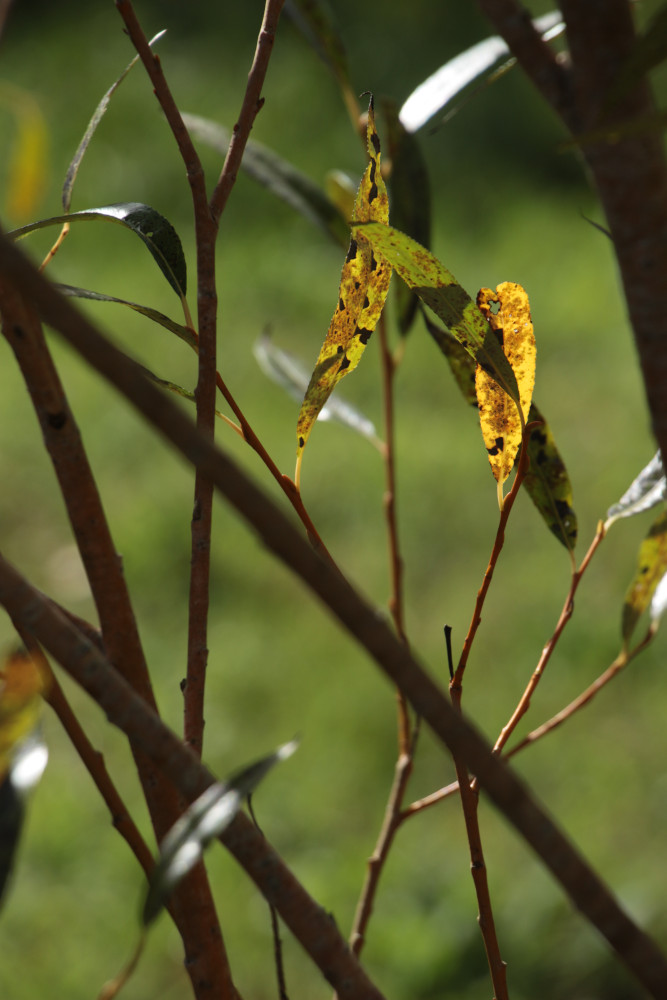
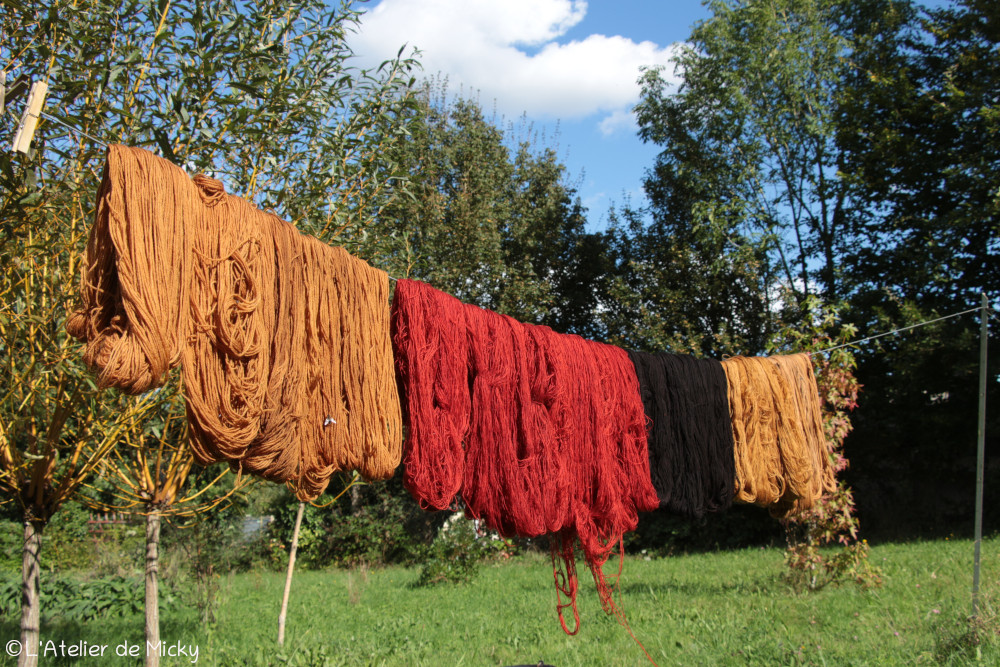
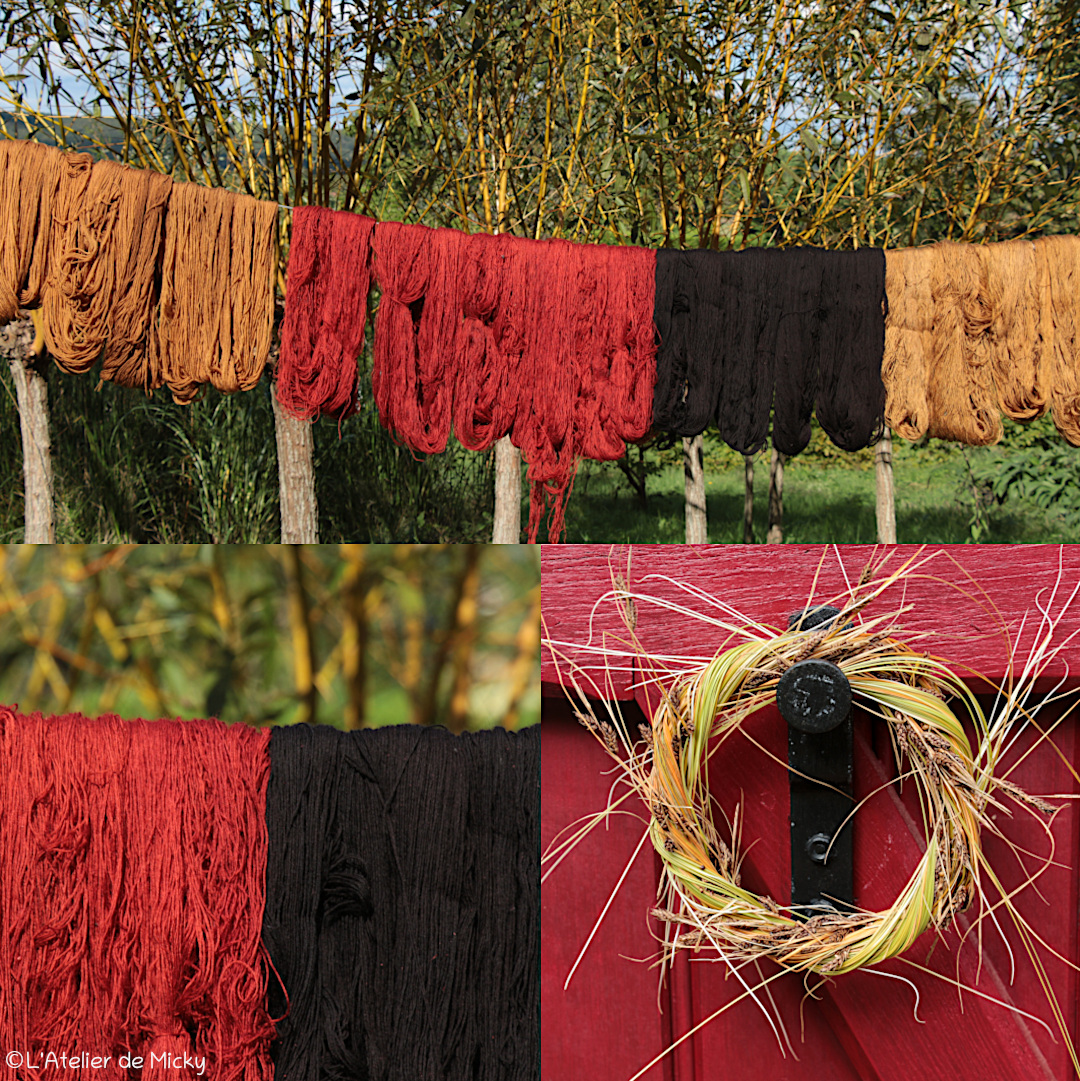
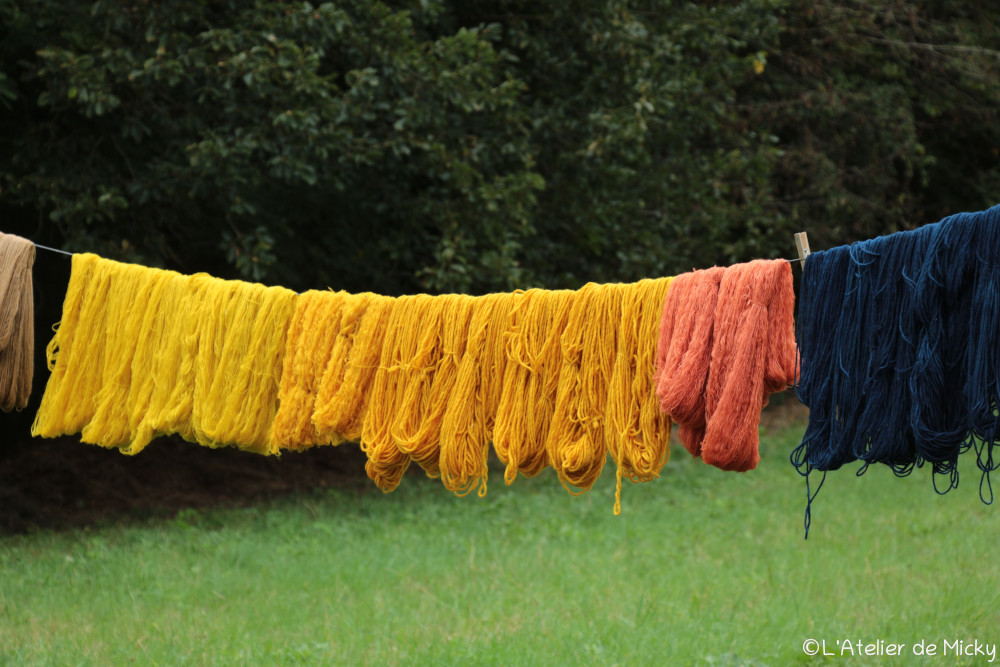
Parfois, la corde à linge accueille des couleurs qui s’harmonisent si bien ensemble! Les fauves sortis des bains de macération aux noix vertes côtoient des rouges puissants à la garance et des noirs (garance sur indigo foncé).
Sometimes the clothesline is full of colours that work so well together! Fawns from green walnut maceration baths sit alongside powerful madder reds and blacks (madder on dark indigo).
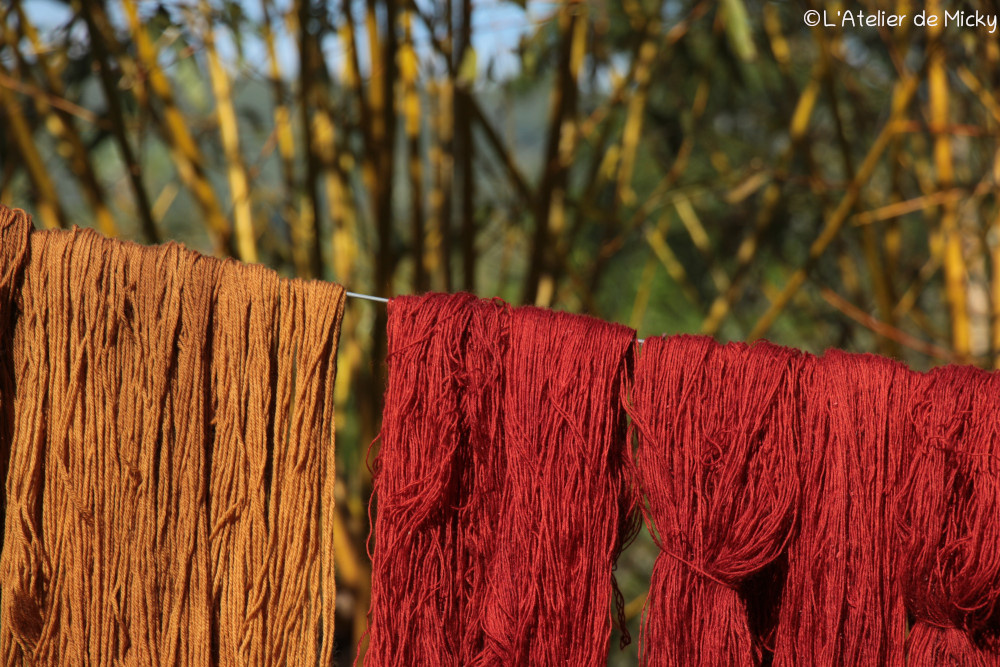
J’ai aussi teinté un peu de soie. I also dyed a bit of silk.
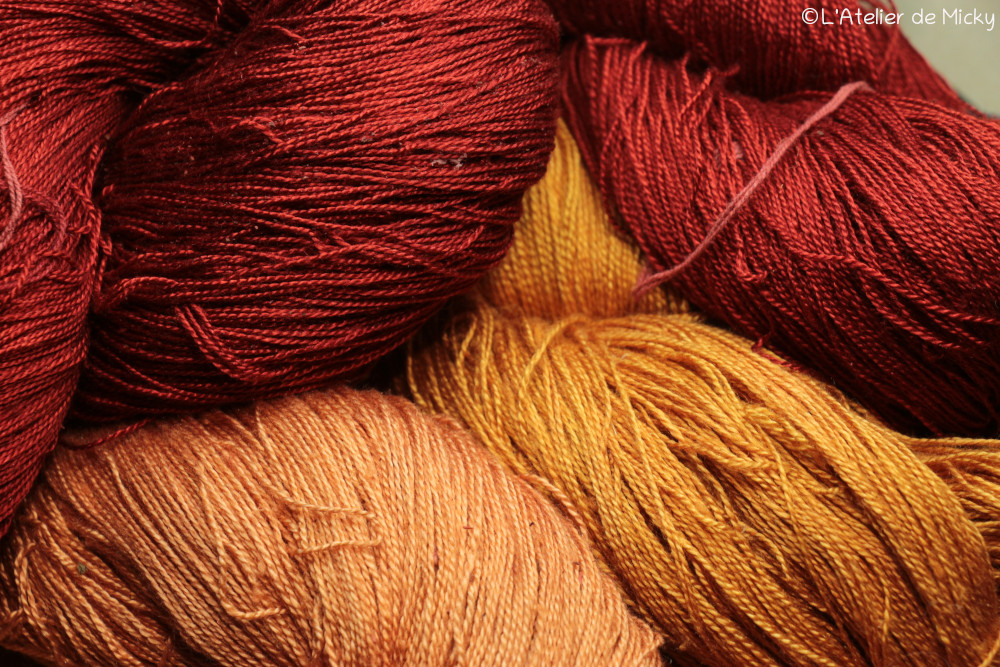
Voici une teinte que j’adore et qui se marie bien avec pas mal d’autres teintes: un orange lumineux obtenu avec de la gaude et un ajout de garance dans le bain. Je ne saurais dire combien, je fais cette recette là « à l’œil » et je monte la couleur au fur et à mesure, quitte à rajouter un peu de jus de garance vers la fin…
Here’s a shade that I love and that goes well with many other shades: a shiny orange obtained with weld and an addition of madder in the bath. I can’t say how much, as I make this recipe by eye and build up the colour as I go, even if it means adding a little madder juice towards the end…
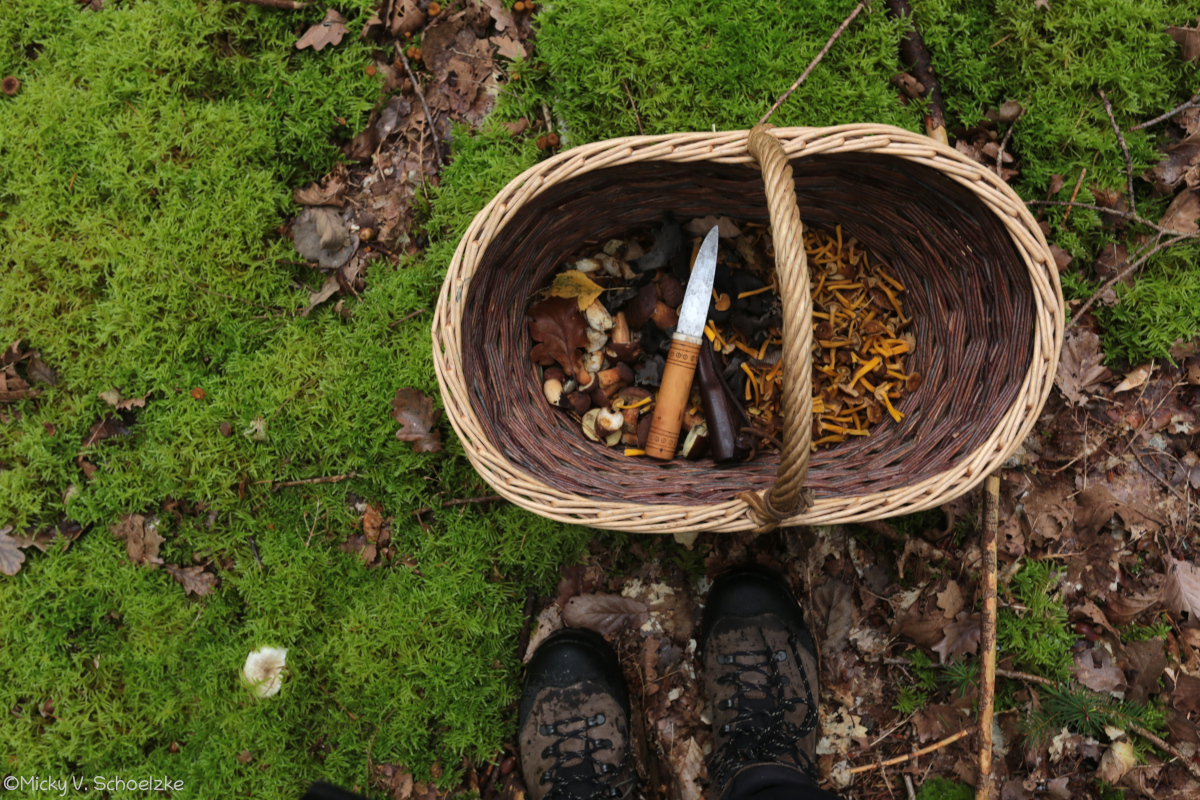
Dans toute l’agitation qui caractérise mon travail en octobre, je n’oublie pas d’aller me faire plaisir et je dois dire qu’après des années trop sèches et sans champignons, ça fait du bien d’en voir autant! Alors je m’échappe régulièrement de mes chaudrons pour aller dans ma bien-aimée forêt…
With all the hustle and bustle that goes with my work in October, I don’t forget to treat myself, and I have to say that after years of too much dryness and no mushrooms, it’s good to see so many! So I escape regularly from the dyepots into my beloved forest…

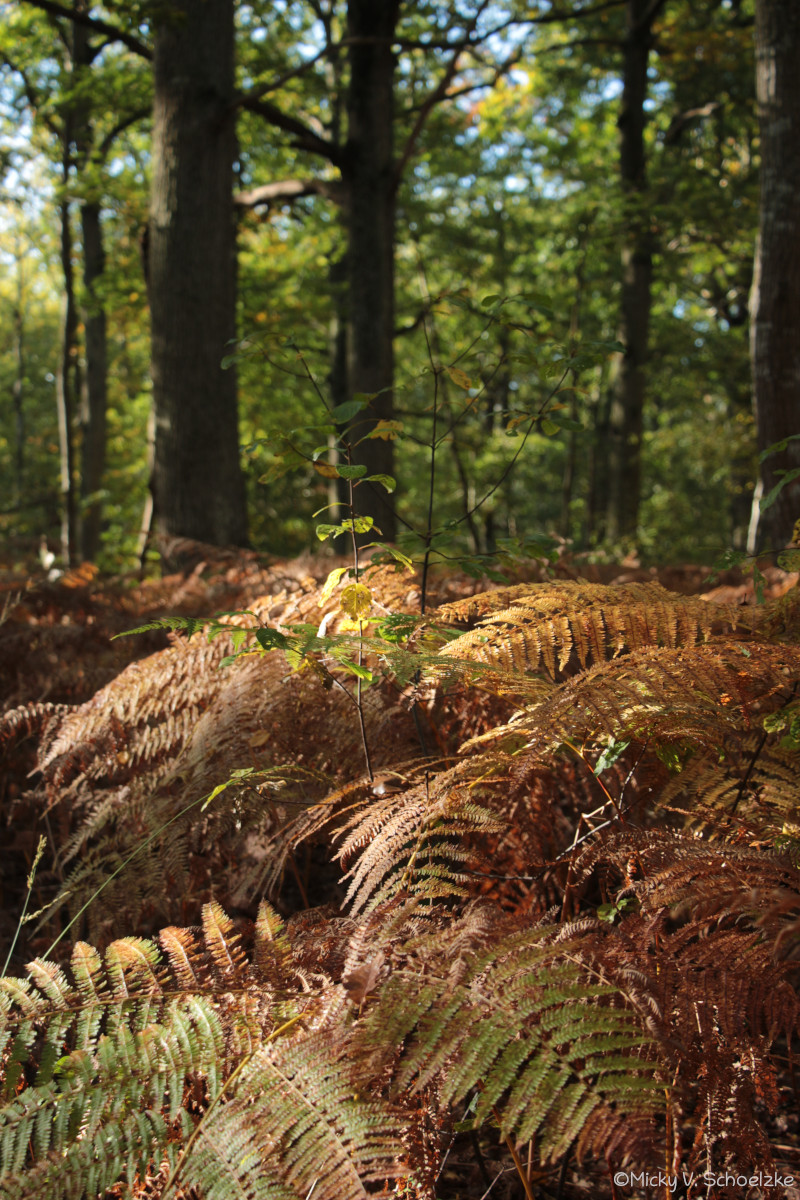

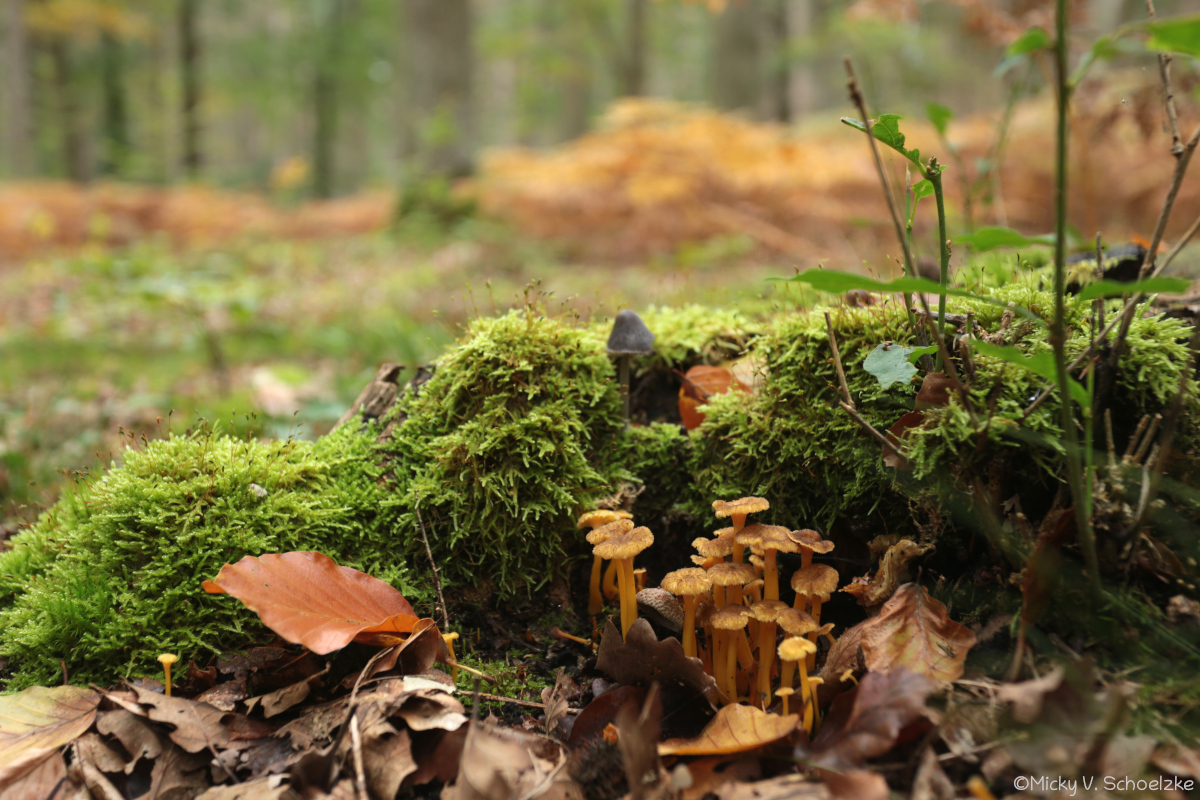

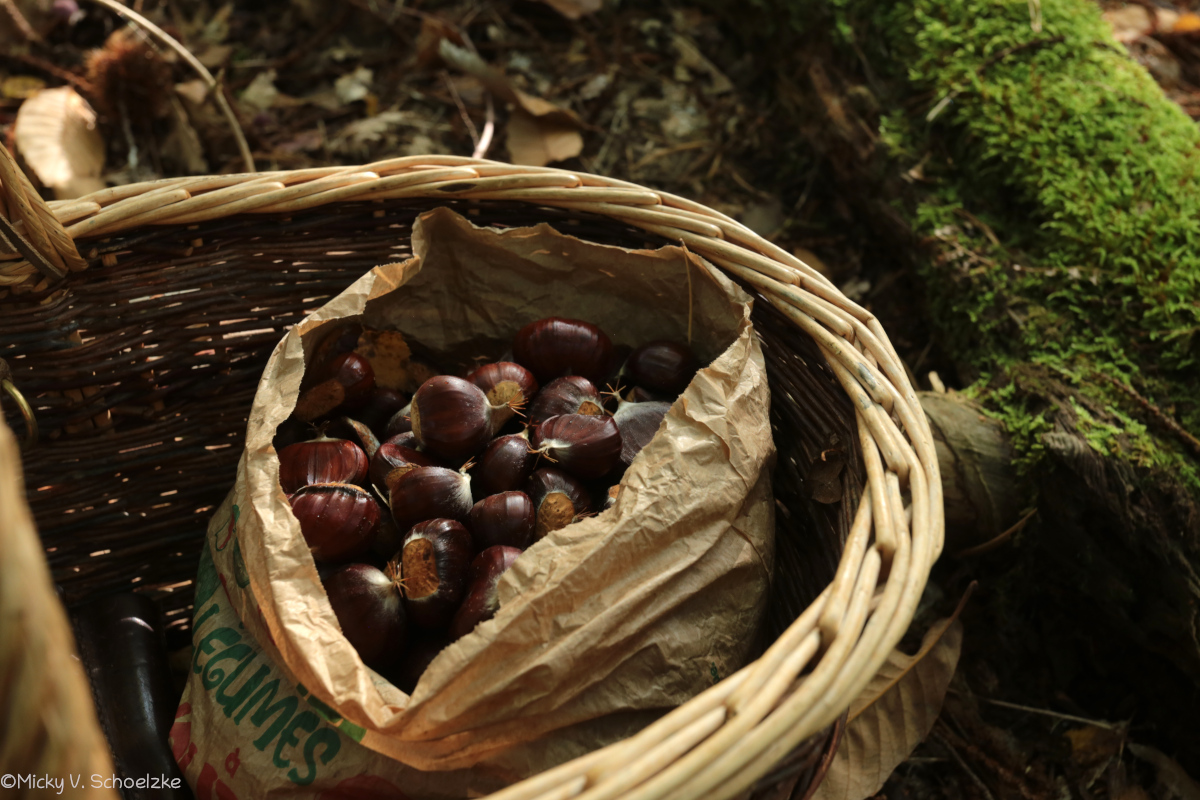
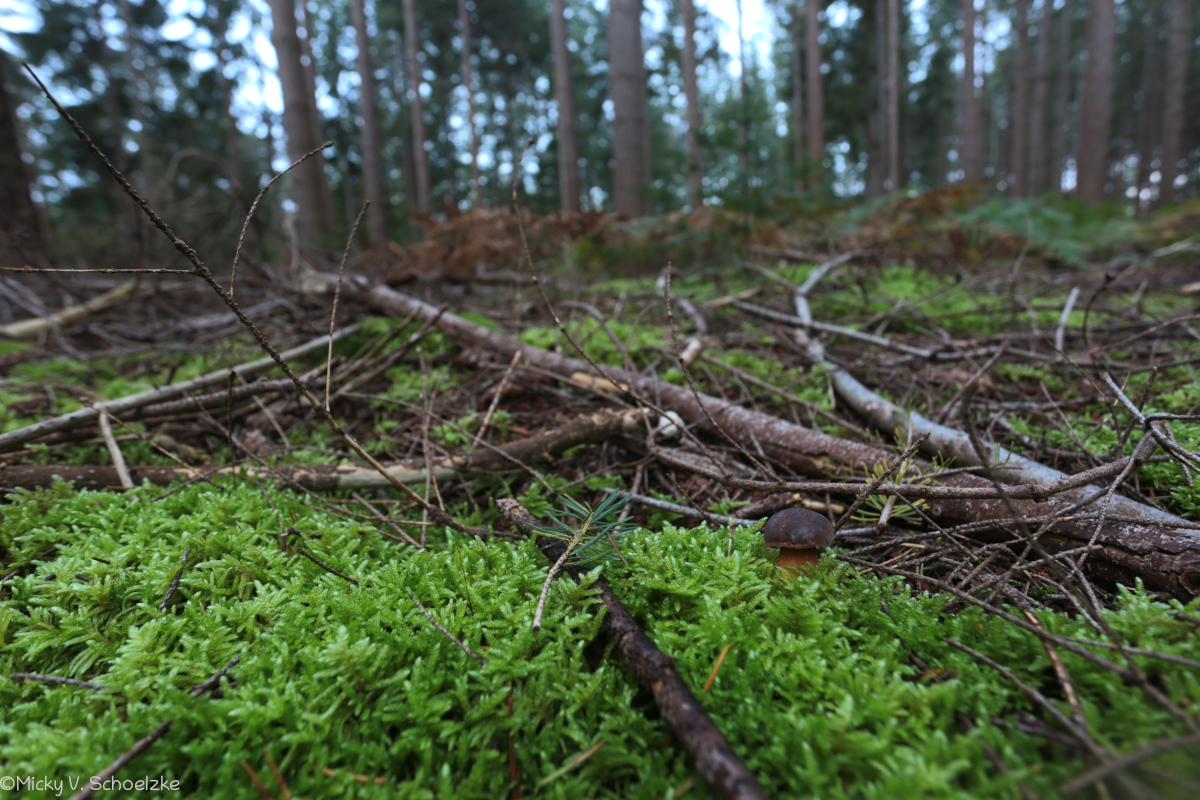
C’est ma dernière ligne droite et mes dernières grosses sessions de teinture de l’année, suivies forcément du travail de mise en écheveaux, échevettes et pelotes… Dans un peu moins de 3 semaines, comme tous les ans, je partirai au European textile Forum en Allemagne pour une semaine de folie textile et ensuite, ce sera le marché de l’histoire de Compiègne qui marque la fin d’une année de travail bien remplie!
It’s the last stretch and my last big dyeing sessions of the year, followed of course by the work of putting skeins, hanks and balls of yarn together… In just under 3 weeks, as I do every year, I’ll be off to the European Textile Forum in Germany for a week of textile madness, and then it’s off to the Compiègne history market, which marks the end of a busy year’s work!
 Le blog de l'Atelier de Micky - Teintures naturelles et Tissages aux tablettes
Dear Micky,
Reading your blog gave me an idea. Seeing 1000’s and 1000’s of vestments in chuches and monateries. Untill the 19th century most had a heavy linen lining. For 15th and 16th century ones that have the original lining, ver few I must say, that lining is often a deep indigo blue. 18th cent ones often have a beige pinkish lining, often glazed to a sheen, if still intact. That color looks exactly like the fabric and ribbons in your photo. Was that how the linen was treated? In the 1980’s I was given a bunch of very dirty scraps of this linen. I washed them in the washing machine. The dirt and the pink color came of. That made me wonder if tge colir was in the starch. But your blog makes me rethink.
On Mon, 14 Oct 2024, 18:04 Le blog de l’Atelier de Micky – Teintures
Hi Frieda!
that’s interesting, indeed! I must admit that I don’t know textiles after the 15th century very well, so I couldn’t say how the linings were treated/dyed/starched. Could it be that a dye like cutch was applied to the fabric a bit like the indigo is applied to some African or Chinese fabrics (mixed with a « binder » and pounded onto the fabric)?